Skip to content

The Vines

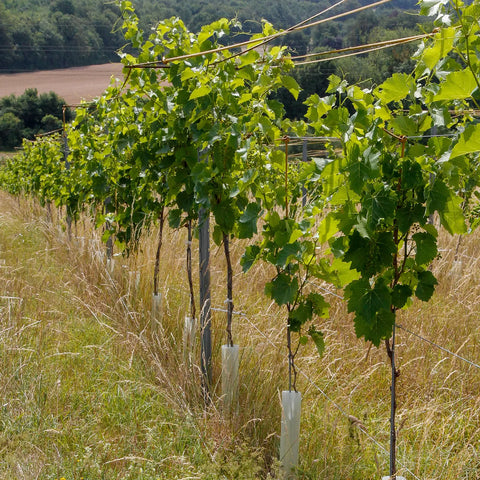
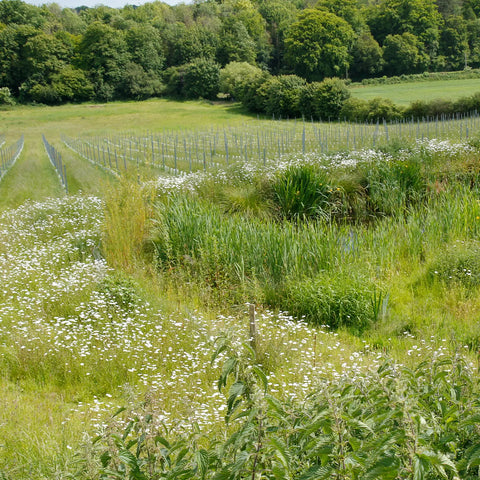
In 2022, just before one of the driest, hottest summers on record, we hand-planted 11,867 vines directly into pasture. Typically vineyards are planted by ploughing the entire site, then glyphosating (aka killing everything with an over-used chemical), before machine planting. But that is not regenerative, that puts all of the native seeds that are sleeping in your pasture at risk. Instead we individually dug every hole, leaving the living roots of the pasture as intact as possible.

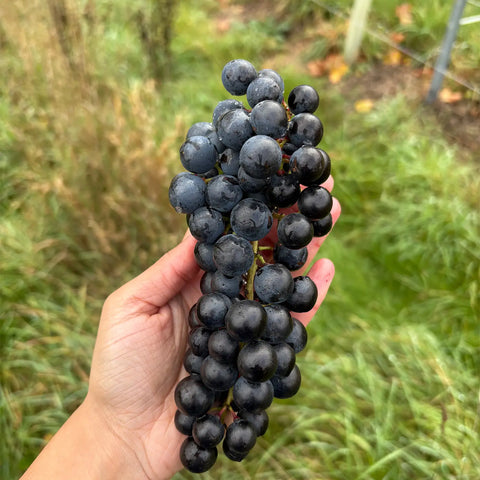
We planted four varieties: Our whites are Souvignier Gris and Rinot, our reds are Cabaret Noir and Pinotin. They are disease-resistant, low-intervention varieties suited to organic and regenerative growing. We have never used a chemical on this land or on these vines. No herbicides, pesticides, fungicides, no synthetic fertiliser. Nothing that brings death - only the biology that brings life. Each year we spend around 6000 hours with our vines, it is painstaking, detailed and loving. When we prune, we hand paint the wounds with local organic honey.

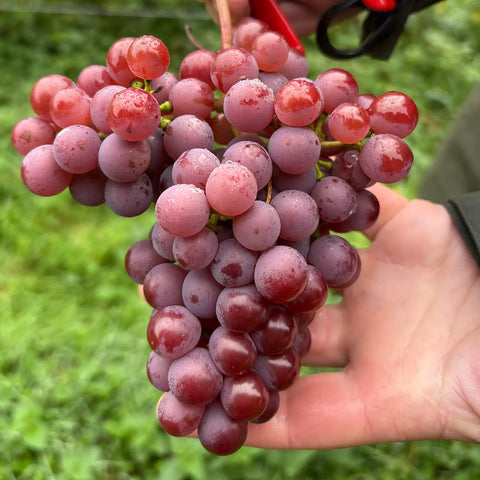
In October 2025, we picked our first harvest: 234kg of Souvignier Gris and a flavouring of Cabaret Noir and 191kg of Pinotin. Rinot didn't make it to the press this year, the birds and the wasps got there first, and we've come to think of that as "nature's share". Because we farm without chemical intervention our wine is a true and honest expression of this particular chalk hillside in Kent - it actually has terroir, a rare thing in an industry dominated by conventional agriculture. The yeast that turns our complex sugars into alcohol is naturally occurring, helping us to create a completely unique wine.

A mature vine produces roughly 1.5 bottles a year. Ours are three years old and unproven - so future harvests could be bigger, smaller, or later than we hope. That's farming. It's especially true when you're farming in the face of climate change, without a single synthetic shortcut to fall back on.

Brewing Compost Tea

Failed Mycelium Packaging Mulch

Mouldy Animal Bedding mulch

PLANTING THE VINES IN 2022

Pinotin on the Vine

Souvignier Gris Harvest

Bottles Collected locally for Reuse

Reclaimed Labels

Farm to Glass:


There is a saying, that wine isn't made in the winery, but on the farm... we agree:

Every decision matters. We don't use chemicals because we don't want to drink them. We don't want them to pollute our farm or the downstream waterways. No one washes grapes before they squish them, think about that. If you drink a wine where the grapes are sprayed with insecticides like chlorpyrifos or acetamiprid or imidacloprid then it isn't just the beautiful bees and butterflies that suffer, it is you. If you choose wine where fungicides like boscalid or azoxystrobin were sprayed to prevent mildew then you are drinking that. You are also drinking the commercial yeasts that need to be used because when you kill the mildew, you also kill the autochthonous or native yeasts that are hyper-local and specific to a local region or vineyard. These help to give wine its true unique and natural character, and indeed terroir!

Terroir is a French concept, that encompasses all of the factors that would make a crop unique to its location. Soil, climate, geography are all part of it, as is the wine-maker. We believe that it is totally spoiled by industrial yeasts, synthetic fertilisers, and chemical pesticides.

We have chosen butterflies, we have chosen to put the ecosystem first, and the result of that choice is a wine we are proud to make and not terrified to drink.

Being regenerative can be complex, but here is the simple view. Running a business or a farm means making decisions - we choose to make regenerative ones. We choose to put the soil first, and future generations first. Here are a few other decisions we have made:

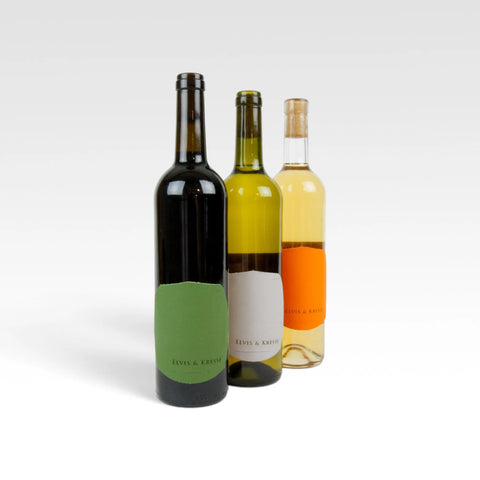
  • We are using second hand bottles. We are collecting these from local pubs, businesses and our amazing neighbours.
  • 50% of the carbon in wine can be attributed to using a new bottle, even if it is made from recycled glass. This is why we collect, clean and reuse.
  • Corks can't be reused, so we have chosen a carbon neutral reconstituted cork.
  • Our labels are also made from waste and applied with adhesives that are easy to peel - which will make the third use of our bottles even easier.
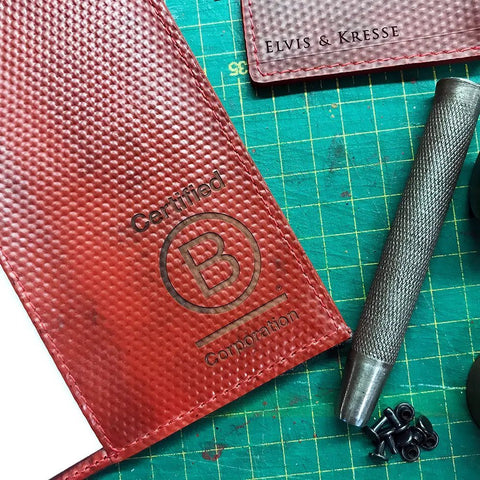
  • The front labels are the same leather shapes we use to create our award winning bags. Which means you can peel them off and either save them to use as coasters or as something to weave (when you have saved up enough), or you can send them back to us to weave or reuse!
  • The back labels are printed, in house, on tea sack that we rescue from Clipper Tea. They can be peeled and recycled.

This year the choice is simple, White or Red


Learn all about our how to try our first vintage and our Friends of the Farm offer.

LATEST NEWS

Our latest news!

House & Garden
#greenbydesign#hattabyng#houseandgarden

House & Garden

The 2011 Feature in House & Garden This is a throwback post - although we are more known for products than interiors, our interior practice is growing and it has been doing...
Elvis & Kresse at London Craft Week
Elvis is hosting a 'Design Your Own' Workshop at Sotheby's Normally our workshops, where you can create your own entirely unique piece, are all hosted at our farm/HQ in Kent. This is...
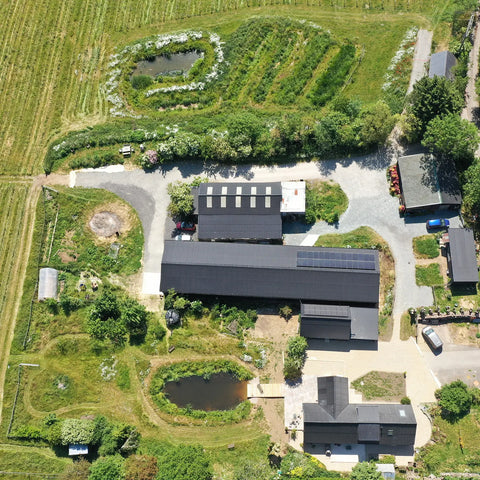
The Elvis & Kresse Farm from the air
Everyone who comes here says they want to stay... Well, now is your chance. Our Yard House is available at a low, all inclusive rent, and we are searching for either an...
E&K + Gotham Newcastle
Introducing Hotel Gotham x Elvis & Kresse! We have been working with hotels for years now - but this collaboration is really significant. And it comes with a great offer for our...
Elvis & Kresse are proud to be one of the first companies to gain B Corp status in the UK
March is B Corp Month  - essentially a time for all B Corps to come together, celebrate, collaborate and challenge themselves to increase their impact. We have written a lot about why...
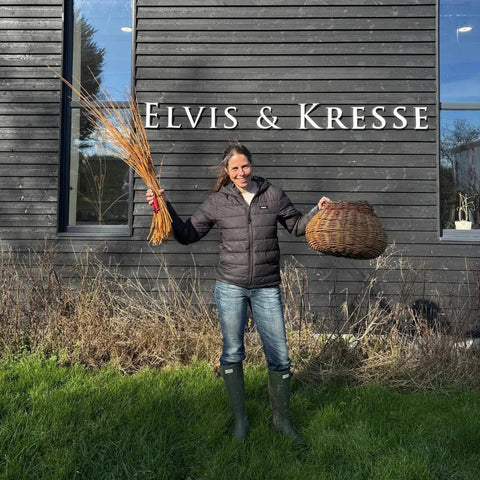
Willow Harvest, You Are Invited!
JOIN OUR WILLOW HARVEST   This is an invitation you don't want to miss. We would love to welcome you to join our willow harvest now, and then come back in summer...